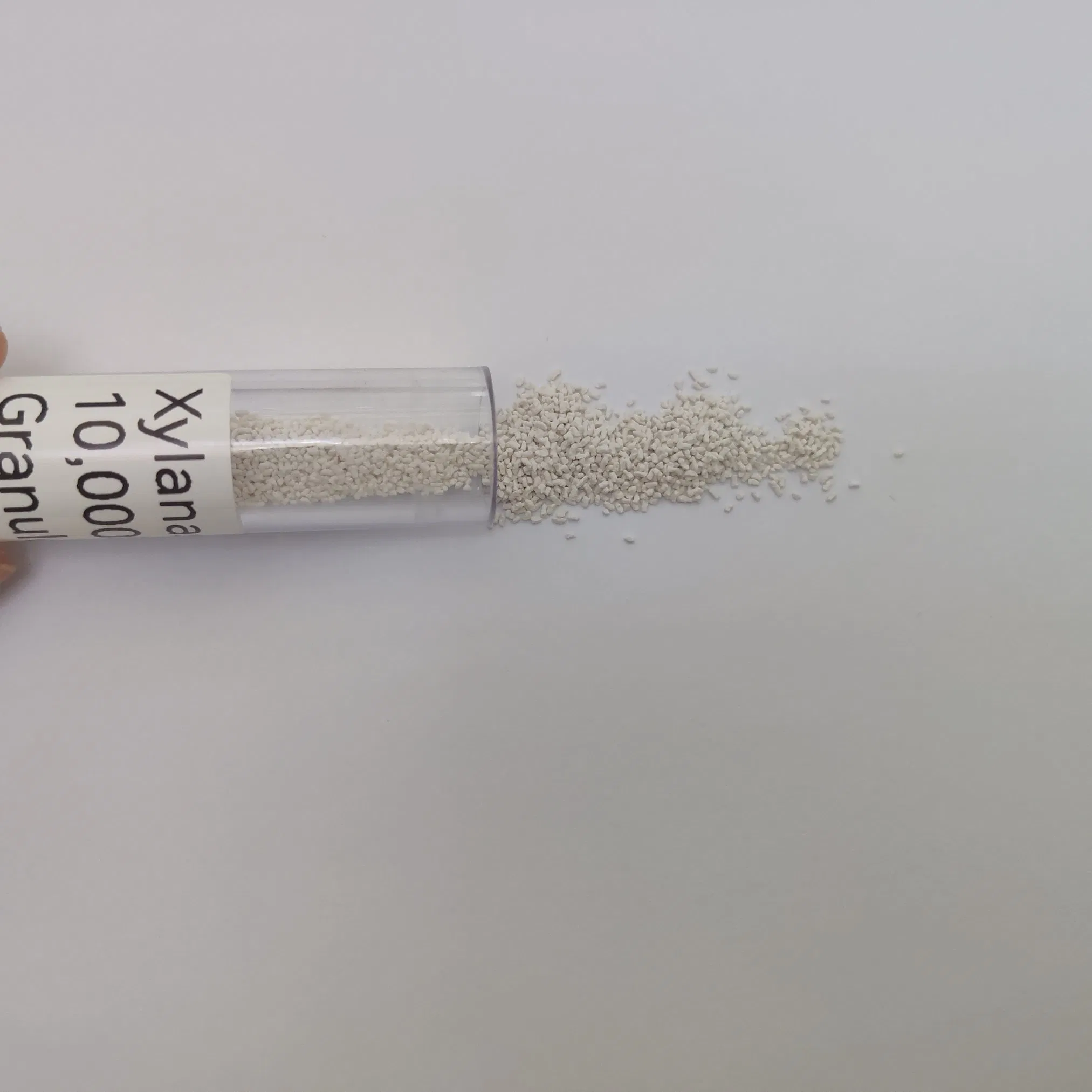
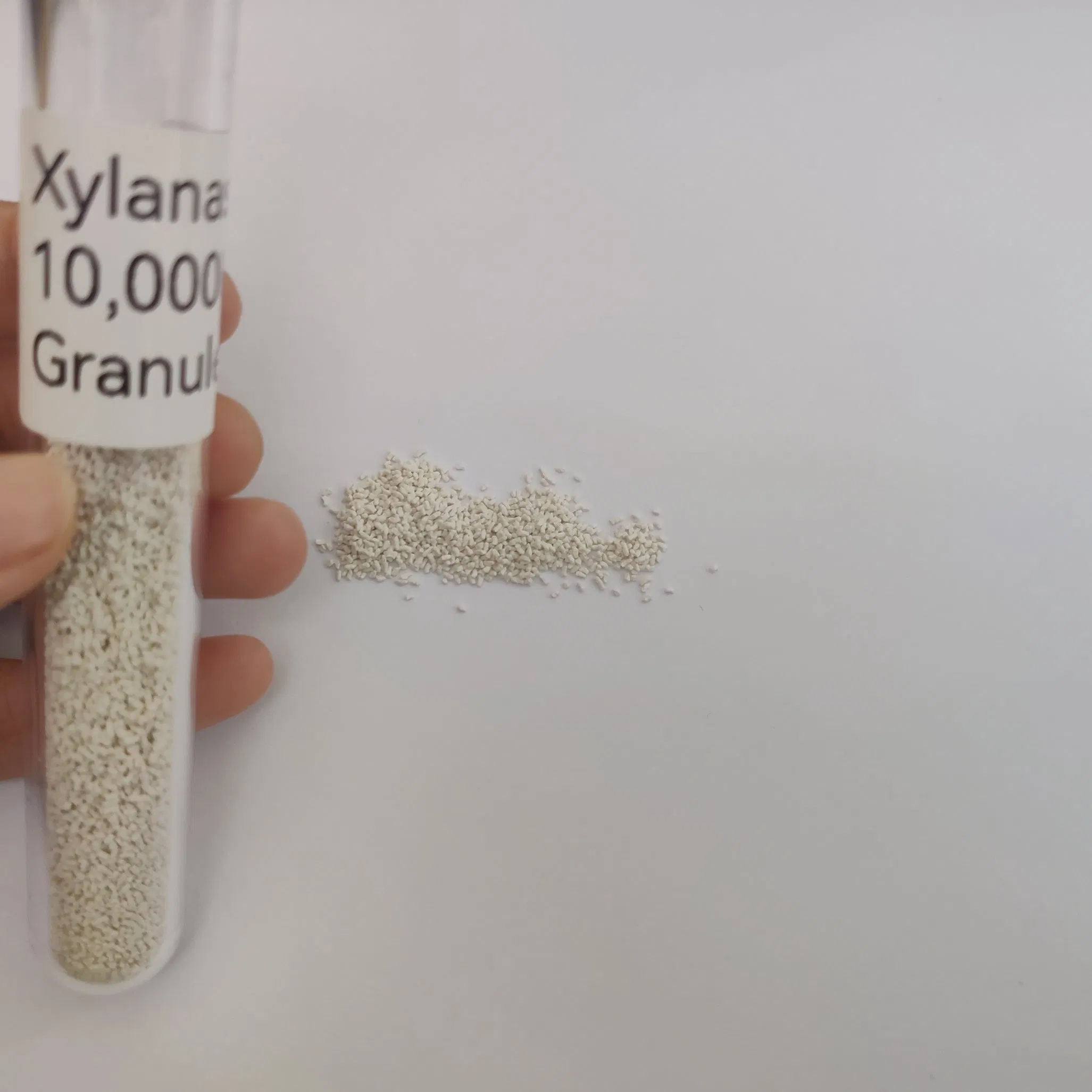
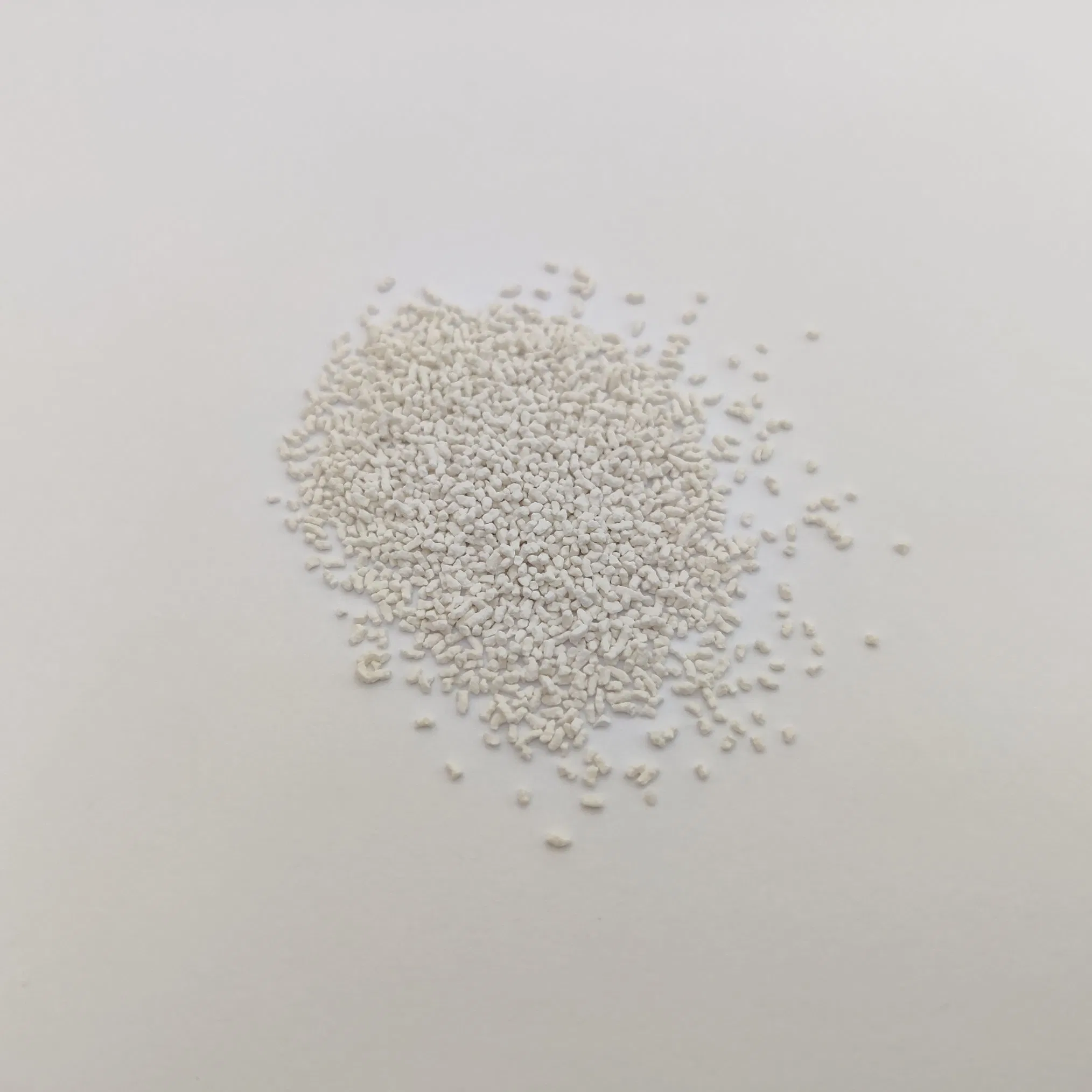
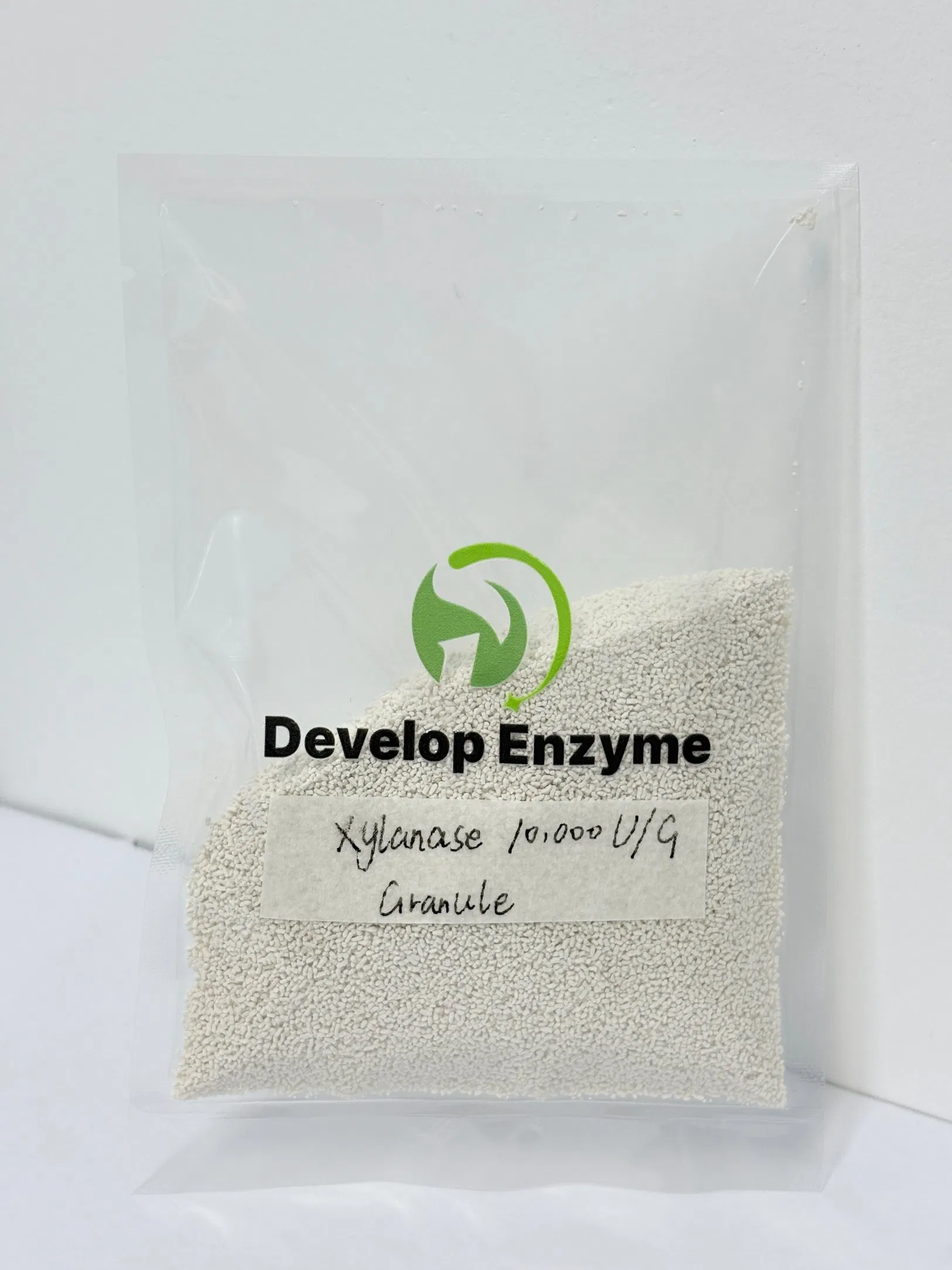
Xylanase Enzyme for Animal Feed
(Broiler, Layer, Breeder, Duck, Pigs, Ruminants and so on)
The xylanase is produced through fermentation by the Trichoderma longibrachiatum strain. It contains endo-xylanase, exo-xylanase, and β-xylosidase so that can rapidly reduce chyme viscosity, release xylose, and improve the thorough degradation rate of substrates. It is particularly suitable for Wheat and Barley type feeds, enhancing intestinal health and feed efficiency.
By effectively degrading NSPs, this product helps to improve average daily gain (ADG), enhance feed conversion ratio (FCR), and reduce wet litter and fecal odor, contributing to better overall animal performance.
| FORM |
ACTIVITY |
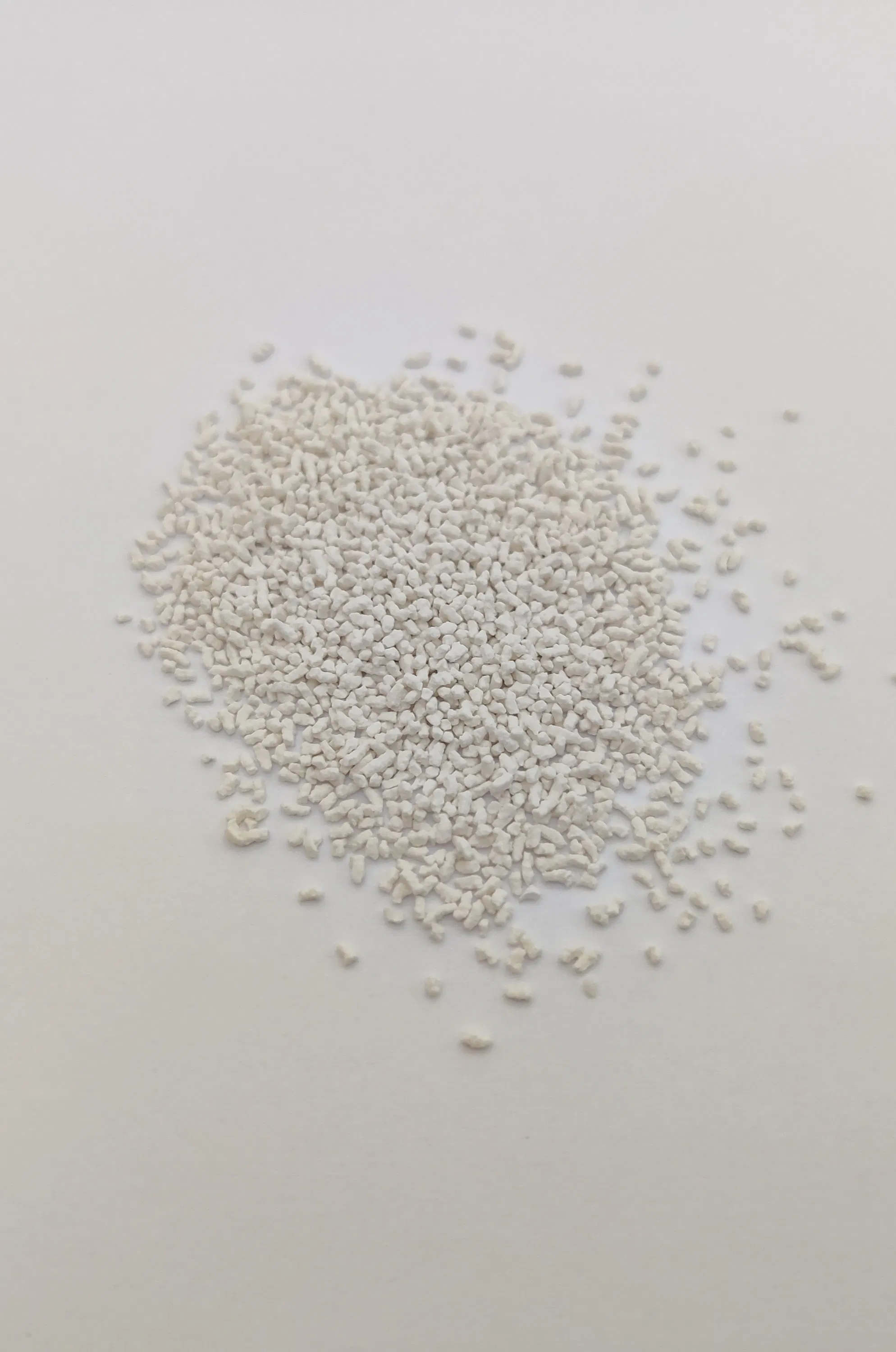
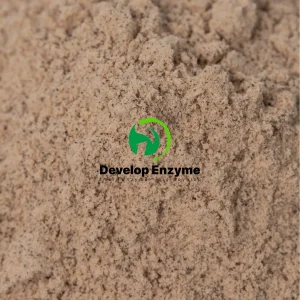
| Powder |
50,000U/G - 1,000,000U/G |
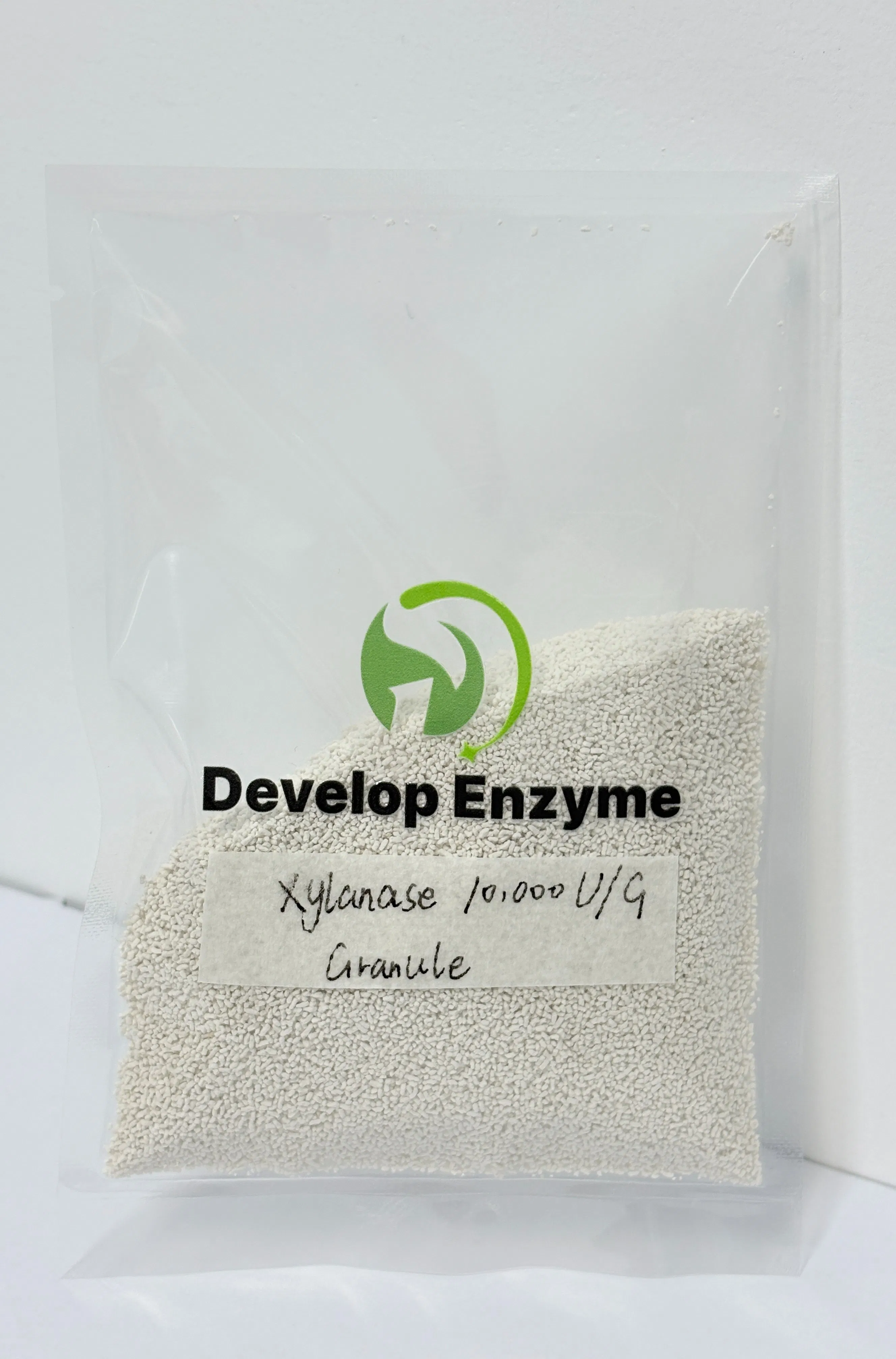
| Granule |
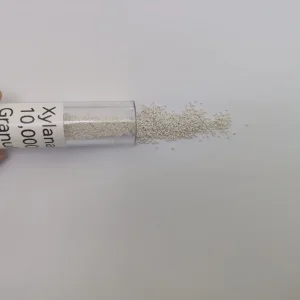
10,000U/G - 20,000U/G |
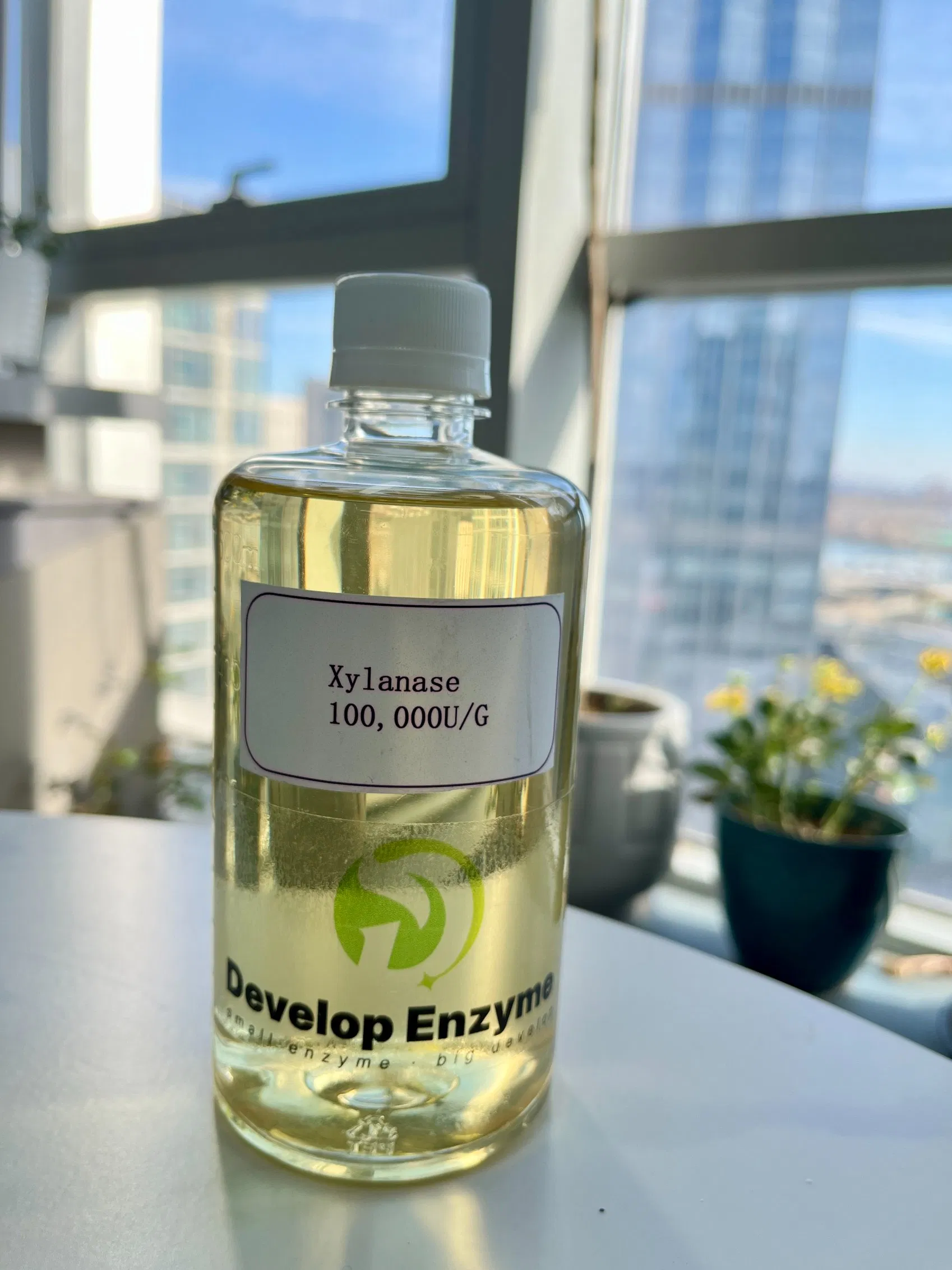
| Liquid |
100,000U/G - 200,000U/G |
Definition of Activity:
One unit of enzyme activity (U) is defined as the amount of enzyme required to degrade and release 1μmol reducing sugar from 5 mg/mL xylan solution per minute at 37℃ and pH 5.5.
- Endo-xylanase + Exo-xylanase system improves efficiency: Rapid breakdown and deep degradation of arabinoxylans commonly found in plant-based feed ingredients.
- Rapid-acting mechanism: High activity + Fast dissolution + Intestinal adaptability.
- High-Temperature Resistance: Maintains stability under normal processing conditions.
Dosage & Packaging
Dosage: 100 – 500 g/ton of feed. Adjust dosage according to species, feed formulation, and production objectives.
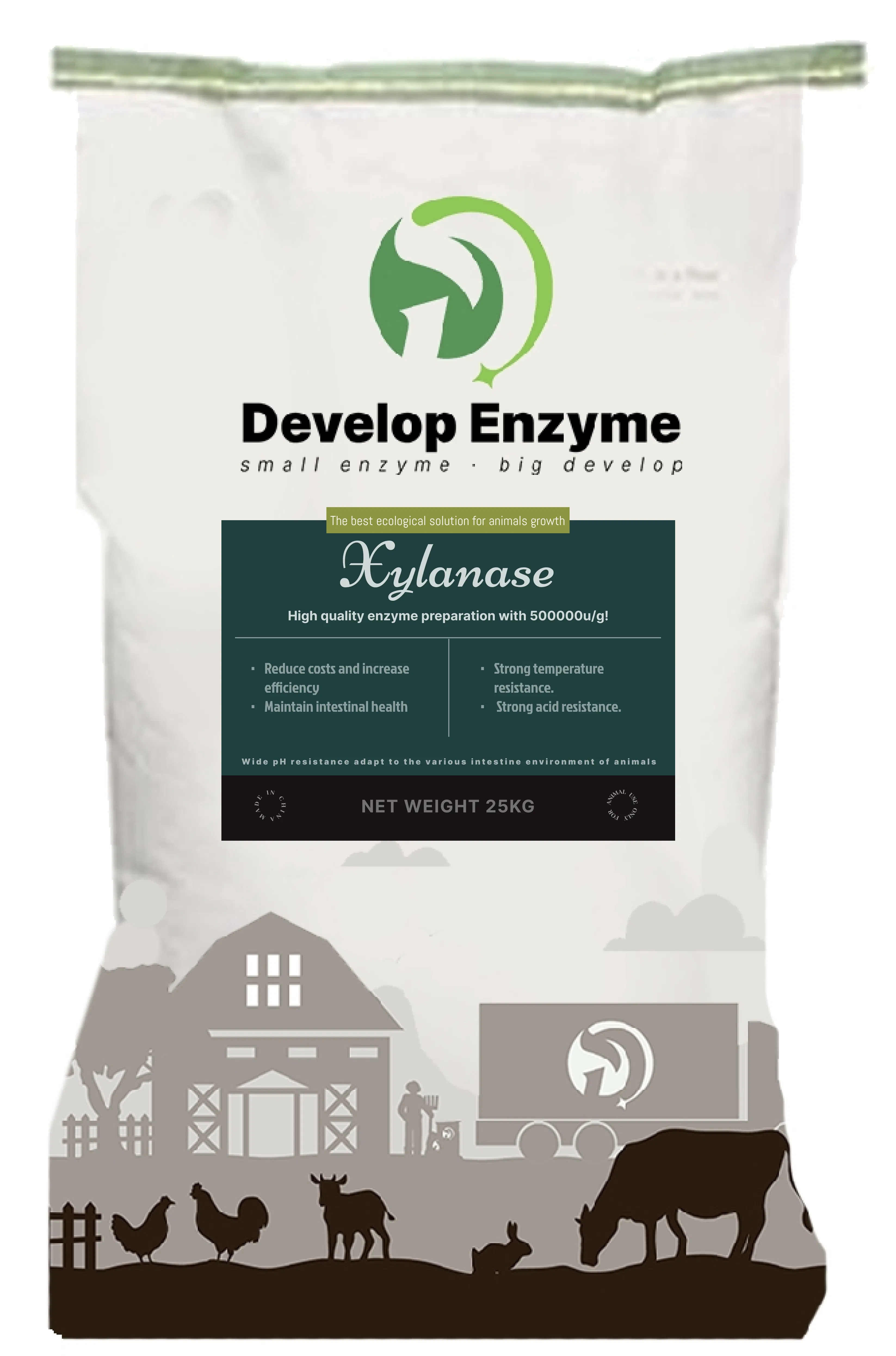
Package: 25kg/1kg /bag
Storage Guidelines
Will remain stable for 18 months when stored in a cool, dry place, away from direct sunlight. Keep the product in its original packaging. Reseal tightly after use to prevent moisture absorption and activity loss.
Which animals can benefit from this Xylanase feed additive?
This enzyme is suitable for a wide range of animals, including broilers, layers, breeders, ducks, pigs, and ruminants, helping to improve feed efficiency and animal growth rates.
What are the main benefits of using Xylanase in animal feed?
It degrades Non-Starch Polysaccharides (NSPs), reduces gut viscosity, promotes nutrient absorption, improves average daily gain (ADG), enhances the feed conversion ratio (FCR), and reduces wet litter and fecal odor.
How is one unit (U) of Xylanase activity defined?
One unit of activity is the amount of enzyme needed to release 1μmol of reducing sugar per minute from 5 mg/mL xylan solution at 37℃ and pH 5.5.
How should the dosage of Xylanase be adjusted?
The standard recommended dosage is 100 to 500 g/ton of feed. The specific amount can be adjusted based on the target animal species, feed formulation ingredients, and your specific production objectives.
Is this Xylanase feed enzyme heat-stable?
Yes, this Xylanase features excellent high-temperature resistance, making it highly suitable for standard feed manufacturing, conditioning, and pelleting processes.
How should this product be stored to maintain its enzyme activity?
Store in a cool, dry place out of direct sunlight. Keep the container tightly sealed after opening to prevent moisture absorption and ensure a stable shelf life of up to 18 months.
 Eik Health